Tag Archives: labels

Word.

For Christmas, a dear friend gave me Susannah Conway‘s wonderful workbook called Unravelling the Year Ahead: 2015. I spend the evening hunched over the book, thinking and writing.

One of the questions that I’d like to share with you is: What is your Word for 2015? Susannah suggests choosing a word that will guide you through the year, a word that makes you feel expanded and inspired.

I scribble options in the margins. Words like Courage and Love, Peace, Presence and Abundance.

But the word that’s right for my coming year is FreeI feel light and optimistic as I scrawl these four letters onto the page.

Recently, I was in a situation where I felt trapped. I wanted out. I wanted to scream and rebel. But I struggled against guilt and obligation. I longed to flee the person, the place, and most importantly, the emotions that arose in me.

However I realised that, instead of complaining, blaming and running, I had to look at myself. These terrifying feelings were hiding in my inner shadows and this event simply shone a light on them so that I could examine them. And rather than resist these feelings, I had to accept them and love myself (and the other person) anyway. I understood that if I didn’t deal with my own issues, the same experience would repeat itself again and again.

So this coming year, my word is Free. It doesn’t matter where I am, what I’m doing, or who I’m with. I can choose to feel free in any given moment.

The following question is: If you lived and breathed your Word every day in 2015, what would be different for you?

If I lived and breathed FREE every single day, I would be doing things out of choice, enjoyment, love and independence. There would be no need or attachment, resentment or fear. I would stop labelling and limiting, blocking and restricting. I would be happier. I would live in the flow. I could do anything. I could be anything.

What is your Word for 2015? Then ask yourself these four questions:

  1. If you lived and breathed your Word every day in 2015, what would be different for you?
  2. List some ways you are already being/experiencing this Word.
  3. What can you do this year to bring more of your Word into your world?
  4. Choose four more words to support your Word this year. They could be anything from inspiring words to names of people to things you want to invest in…
favim.com

favim.com

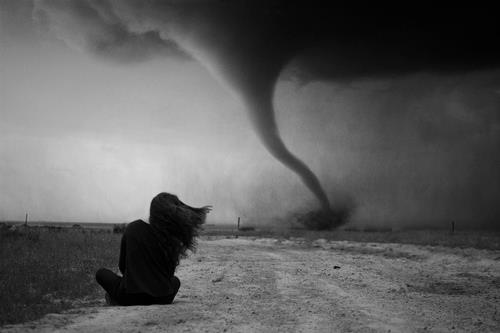
Whirlwind

The last couple of months have been challenging. A whirlwind of emotion has been spinning forcefully within me. The intensity of these feelings has scared me. I’ve fumed with anger, cracked under pressure, retreated in fear, and battled against exhaustion.

Today, a dear friend sent me this passage written by spiritual teacher and author Jeff Foster:

Your feelings, the energies alive in your body right now, were not ’caused’ by anyone else, and nobody else can take them away.

Nobody else is responsible for your feelings. This realisation can end the blame game once and for all, and leave you standing in your true place of power – the present moment.

Making others responsible for how we feel is the beginning of all violence, both internal and external, all conflict between people, and ultimately all wars between nations.

Let others off the hook. Honour what is alive in you right now. Learn to hold your own feelings like beloved children, however intensely they burn and scream for attention. Celebrate the aliveness in your hurt, the vibrancy of your disappointment, the electricity of your sadness. Kneel before the power in your anger, honour its burning creativity.

From this place of deep acceptance, you do not become weak and passive. Quite the opposite. You simply enter the world from a place of nonviolence, and therefore immense creative power, and you are open to the possibility of deep listening, honest dialogue, and unexpected change.

In suffering you become small. In love, anything is possible.

Of course, I knew these words were true. But I also felt strangely annoyed by them. Because I can’t hold anybody else responsible for how I’m feeling. I am not a victim.

Blaming other people or situations may seem like the easy option. It can be comforting to be able to vent to a friend. And it can feel nice to have somebody take your side, bestow you with sympathy, and agree that the other person is wrong. After all, the ego loves to be right.

I had convinced myself that I can’t be at peace until this problem is resolved. That I can’t be happy unless he/she changes. And that I can’t go after what I want in life when I’m trapped by this situation. Hip-high in resistance, I’ve been wading against the flow of life.

However, today’s message has hit home for me. I’ve realised that if I keep raging and complaining, I’ll only be stoking the fires of this energy. I’ll become a casualty of my ego. A slave to circumstance.

Tonight, as I lay my head on the pillow, thoughts of my current predicament come to mind. A swirl of emotion begins to rise up in me. Then, I remember Jeff Foster’s words. Blame nobody.

There may be a whirlwind howling right outside my door. But I am not the whirlwind. And I am not in the whirlwind. I can see it and hear it and it scares me senseless on occasion. But it’s not to blame. It’s a whirlwind. And whirlwinds do as whirlwinds do.

And when the whirlwind spins a destructive path across my world, I’ll join the dance. When it rips things apart and flings them aside, I’ll bow down in gratitude. Because those things to which I’ve formed deep attachments actually need to be destroyed.

So I close my eyes and listen to it howl.

weheartit,com

weheartit.com

The Makeup of Self-Image

My friend and I are getting ready to go out. I am without a mirror as I sweep a mascara wand through my lashes. My hand slips and I know that I probably have black smudges on my cheek and eyelid.

I get up, about to rush to a mirror so I can correct the damage. My friend stops me and dares me not to change anything. “For how long,” I ask, a note of panic in my voice. “Ten minutes,” she decides.

As I sit there, I am amazed at the feelings and judgements that surface. Words like silly, stupid, ugly, imperfect and weird flash menacingly into my mind. I haven’t even left the house or come into contact with anyone besides this one friend. And it’s only makeup. I’m like my very own classroom bully.

My friend watches me with interest as a range of emotions pass through me.  I look her right in the eye and sigh, “I’m going to need more than ten minutes.”

Eat Pray Love?

I am hesitant about spending three days on my own in a mostly closed-down seaside village in March but I know I want to get away and I also know that I have to do it alone.

I have had a bit of a rough time of it in the last while and I need respite from the storm. As I drive from east to west Ireland, I head straight from a metaphorical storm into a real one.

I expect to feel lonely but I am quite content in my own company. Upon my arrival, I go out to the beach. I walk against high winds and watch the crashing waves. In the evening, I take my laptop to a hotel and peek out at the ocean as I sip on a glass of Guinness. That night, I nibble on chocolate as I watch a movie from beneath a mound of blankets. And I have the most wonderful sleep.

On the second day, I complete a college assignment and jog down a quiet country road. I make a “chillax” playlist, light incense and candles, and get drunk in the bath on a glass of red wine as I delightedly tuck into Elizabeth Gilbert’s endearing memoir Eat Pray Love.

weheartit.com

weheartit.com

That night, the wind shakes the rafters and the rain pelts down. And it isn’t the kind of rain that appears on many a relaxation CD; it’s the kind that makes you worry for the house (and for yourself).

On the third day, the loneliness descends. I feel too depressed to make food or leave the house so I give myself permission to close the curtains, put on a movie and eat chocolate. The sun shines annoyingly from behind the blinds. I feel guilty.

Earlier in the day, I had finished Eat Pray Love. Elizabeth Gilbert had found pleasure, peace, God and love, and I am happy for her, but now I really am alone. Even the nice, fun self who got drunk with me in the bath has left and been replaced with a demanding, insatiable self who reprimands me with all the fervour and righteousness of a school-teaching nun. I haven’t signed up for this. I’m on holidays. I can do what I want.

Halfway through the movie, I decide that I’d actually quite like to spend some time in the company of the sun and the ocean so I drag myself out of bed and embark upon a cliff walk.

The wind whips me in several directions. The ocean is beautiful but frightening as its waves roar and rise higher and higher, its spray landing on my face. I wonder if it’s safe to walk so high up, to be so close to such fierce unpredictability. There is nobody around. Am I alone in my insanity?

At one point, the wind grows so strong that I have to hold on to a railing. Then, there is no more railing. I could turn back but I’ve come so far. I just have to get to the peak and turn the corner. I’m stubborn in my insanity too.

Suddenly, a stone hits me in the face. I march to the top and turn the corner. Only then do I raise my hand to my cheek. I quite enjoy the sting of it. Tears spring to my eyes. Am I a masochist? Do I think I deserve to be hurt? No. It is simply because I can understand physical pain. Physical pain allows me to lift a gentle hand to my cheek to check if I’m okay.

As I move onto safer terrain, I ask myself why I’d been scared. In case I died? With a jolt, I realise that it isn’t death I’m afraid of; it’s more suffering. If you’re so afraid of suffering, a voice from within asks, why do you keep creating more and more of it? Why not put an end to all the guilt, the shoulds and shouldn’t haves, the only ifs and whens? Why not stop the exhausting drive for perfection?

If I’m serious about ending the needless suffering, I need to peel off the “good” and “bad” labels I put on everything. I have to stop the judgements. I also have to stop being so dependent on outside events, on other people and their opinions, and on my own thoughts and feelings.

I’ve been so dependent on a variety of people, things and invisible forces that I’m like a small child perched on one end of a see-saw, always waiting to see who’ll sit on the other side, before I can know how high or low they’ll take me.

How I long to connect with that inner stillness I’ve been reading so much about. That pure, perfect, beautiful, unconditional love that’s apparently a part of me. If only I could know, really know, that the essence of who I am is like the clear blue sky, then I wouldn’t be so disturbed and even altered by the lightning and the storm clouds.

All I have to do is accept myself exactly as I am. And accept others for who they are. And accept situations and feelings just as they are too. All I have to do is accept graciously and love unconditionally. But how do I get there?

I guess the first step of all this acceptance stuff is to accept that I don’t have all the answers and that I’m just not there yet.

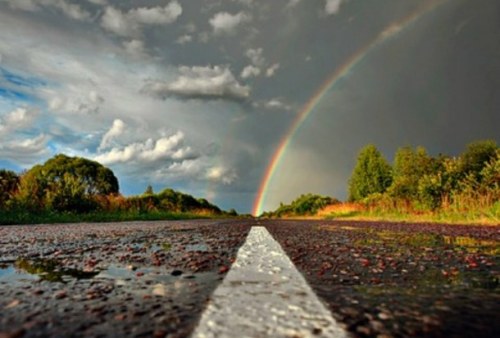
And so I start to run. The wind settles, the sun beams down from a clear blue sky, and, I shit you not, I run right underneath a rainbow.
favim.com

favim.com

An Invitation to Live Life As It Is

“The rain is awful!” “Glorious weather we’re having!” “I’m so happy!” “I feel bad.” “It’s so pretty.” “That’s really ugly.” How often we label things, people, and moods as “good” and “bad”.

When you’re surrounded by “good” stuff, you think your life is running smoothly. However, as soon as something “bad” happens, you’re thrown into chaos and despair. The first sign of a “negative” emotion and you’re reaching for the antidepressants or the alcohol or you’re throwing yourself into excessive activity or mind-numbing television shows. You run from what you perceive to be bad, avoiding it for as long as you possibly can, then battling it with all your might. No wonder you’re exhausted! You’ll only be content when the sun is shining, when you look fantastic, when everything goes the way you think it should, and when everyone around you behaves the way you expect them to. Good luck with that!

In The Invitation, Oriah Mountain Dreamer writes about her experience of resisting what she had labelled as bad:

“The world offers itself to me in a thousand ways, and I ache with an awareness of how infrequently I am able to receive more than a small fraction of what is offered, of how often I reject what is because I feel it is not good enough. Some mornings, sitting for a moment in the backyard, I don’t even notice how I have tensed my muscles against the sound of the city’s traffic, resisting what I have decided is a marring of the morning quiet. I pull away from it, unable or unwilling to welcome this sound as part of what is alive, as simply the sounds of men and women beginning their day, going into the world to do the work they do to provide for themselves and their children.”

In another chapter, she writes:

“We live in a culture that wants only the times of fullness, that often denies outright the fading times. We have forgotten that there can be no full moon without the existence at other times of the tiny sliver of light surrounded by darkness. The fullness of summer is held, on the opposite side of the wheel, by the time of the longest night. To be separated from these cycles of the world, from the births and the deaths, is to be separated from life itself. But still we work frantically, seeking the knowledge that will put humans outside this natural cycle of blossoming and decay.”

Imagine the relief if you decided to stop fighting the darkness. How would it feel to simply accept everything exactly as it is? To recognise that everything is as it should be? And how do you know that everything is as it should be? Because it is. It’s so simple that you think you need to make it more complicated in order to understand it. You make your life difficult by suffering and complaining because you think things should be different from what they are. Things should not be any different. Why? Because what is is.

This does not mean staying in a situation that is not serving you well. The trick is to be present enough to acknowledge that it is time to move forward. People often have to feel bad enough for long enough before they will finally do something about their suffering. In this case, the “unpleasant” situation has also unfolded exactly as it was meant to. So that you could learn. So that you could grow. So that you could realise that you love yourself.

When you’ve lived an entire lifetime of expecting things to be “wonderful” and constantly (but not at all surprisingly) being disappointed, this new mindset takes a bit of time to sink in. Just today, I felt annoyed because somebody behaved in a way that I didn’t like. What a ___head, I muttered as I put my foot on the accelerator. This thought filled my body with heat and anger. My head throbbed as I tensed against these sensations. I don’t want this pain, I thought. Pain is something I’ve always feared. It was something I had learned that you had to immediately eradicate. I realised that I was, yet again, resisting reality. I thought that the man should have acted differently. But the reality was that he had behaved exactly the way he had behaved. I could accept it. Or I could dwell on it, take it personally, wish for something different, and wind myself up tighter and tighter. I also didn’t want to be in pain. But I was. I could fight against that too. Or I could breathe into it and observe what happened.

As I drove, I looked out at the countryside. The day was “dull” and “dreary”. The sky was grey and heavy. The rain drizzled “monotonously”. I knew that if the sun was shining, I would feel instantly uplifted. I’d marvel at the shock of yellow rapeseed in the fields and gaze up at a sky streaked with colour.

What’s wrong with a day like today, I asked myself. The trees and bushes glistened a lush green, having drunk an abundance of rain. I too drank in this perfect example of nature. I realised that the guy from earlier was merely acting as a mirror to reflect something to me that I needed to look at. If I stopped making it all about him and started making it all about me, I could learn from it. I then brought my awareness to the pain in my head. It told me that I’m alive. I took a long and satisfying breath.

The rain continued to fall. Instead of cursing the weather and agonising over all the things I couldn’t do, I became aware of all the things I could do. I could practice yoga and listen to music, then make myself a huge mug of tea, and curl up in an armchair with a fluffy blanket and a great book. Or I could lie on my bed and listen to the rainfall, grateful that I have a roof over my head. I could see the world for what it is and lovingly accept it all.

This field is astonishingly joyous.

Image: Author’s own.

New Look on Life

Sometimes, the simplest and seemingly insignificant moments can change the way you view things. You’d hardly expect an epiphany to strike as you elbow your way to the cheapest sale item in New Look. But that was exactly where it happened.

I had tried on half the sales rack before leaving the exasperated changing room attendant with a mound of unwanted clothes. Having given up on finding anything that suited me, I wandered upstairs to peruse the shoes when a beautifully coloured dress caught my eye. I approached it tentatively because of the massive Maternity sign hovering above. I stole a glance at the floor staff and puffed my belly out a little. I felt like I shouldn’t be there. And that was when it hit me: I could go wherever the hell I wanted to go. I had been obediently walking within the perimeters of the square labels that society had branded me with, questioning nothing and missing everything. Dramatic stuff for someone who shops in New Look!

I began to realise that these strangers did not know who I was. My life was an unopened storybook. For all they knew, I was a happily married schoolteacher, excited about her upcoming arrival. Or an unemployed singer-songwriter torn between travelling to New York to pursue a dazzling career, and staying in Dublin to raise a child who would never know his father. Or a weird single girl pretending to be pregnant.

Twenty minutes later I strolled out of the store, swinging my bag of purchases: an expectant mother’s dress, a man’s hoodie and a teenager’s T-shirt. This small step opened up a whole new world of permission and possibility. Granted, I had only stuck a little toe outside of my comfort zone but, for someone who has always been excessively honest and terrified to bend, let alone break, the rules, it felt liberating.

Images: http://en.wikipedia.org/wiki/File:Butterflies_UFmuseum.jpg; http://browneyedbellejulie.blogspot.com/; http://sussurrosegritos.tumblr.com/page/110

Attachment: Loved ones, identity crises, and negative thinking

This is a big one. Attachment affects every area of our lives. Some of us believe that if we weren’t attached to people and to things, we’d have no reason to be here on this earth. But letting go of attachment is the biggest lesson we have to learn. The biggest hurdle to overcome. And once we do this, we will be free.

It is our attachment to people, to things, to ideas, and to our thoughts that keeps us stuck and causes us endless amounts of pain. Initially, the severance of these attachments may also cause pain. After all, these shackles have had us chained for many, many years. They’ve prevented us from moving forward but it’s all we know. Then, one day something happens that breaks these chains and sets us free. There is a new world out there, bright and exciting and pain-free. Do you want to join me on this magnificent journey? Here’s how.

1) Awareness

First of all, it’d help if you could figure out what it is you’re attached to. Once you recognise your self-destructive patterns, you can do something about it. In the following sub-section, I’ll discuss the different things we become attached to.

a) image

If you’re attached to your external image, prepare to be saddened, disappointed, angry and depressed. An attachment to how you look will lead to pain and suffering every time you break out in pimples or gain a bit of weight. Hair loss, sagging skin and wrinkles will cause you to sink into a spiral of self-disgust. However, if you can let go of this attachment to your image, you’ll soon realise that there are more important things in life than how you look on the outside. Your spirit is beautiful. Allow it to shine.

b) other people

We become attached to our parents, friends, other halves, and to our children. We believe we couldn’t live without them, and we understand that they make us whole. If you feel this way, I have two words for you: Uh oh! People leave. People die, move away, or move on with their lives without us. Relationships break up. Children move out. Friends drift away. This is a normal part of life. But if you’re too attached, you’ll find it very hard to survive a loss like this. First, work on becoming whole yourself, then any relationship you have with another person will be an added bonus to your already full and healthy life. Their presence may enhance your experiences but their absence will not diminish you as a person.

c) identity

Many of us fall into the trap of defining ourselves by our job title, our gender, religion, social class, and even by our taste in music. This is dangerous. And this is why many people commit suicide after a job loss. Lately, many Irish people have become extremely disillusioned by the child abuse scandals in the Church. We were once a very Catholic country. Now, we are losing our attachment to our religion and this isn’t a bad thing. For the breaking of attachment creates an opening for more understanding, acceptance and inclusion.

Who are we without our identifying labels? For a short while after letting go of attachment, you may feel lonely, lost and confused. Confusion is a good thing. It means you are questioning life and your place in the world. Sit with it. You may think you’re lonely, lost and confused when in fact you’re now free and open and alive.

d) thoughts

The attachment to our thoughts is what causes us most pain. We think: I am fat, I am useless, no one loves me, life is difficult. When we attach to such thoughts, we believe them to be true and we live them. We manifest our own reality of hardship and self-hatred. But we don’t have to attach to such thoughts. We can choose to view things in a different light. When it’s raining, for example, you have a choice. You can attach to the thought This weather is awful OR I love the sound of the rain.

The death of a loved one is probably the most painful thing any of us will ever go through. And even at that, we have a choice as to which thought we attach to:  They are gone forever. I’ll never love again. I miss them so much. Life will never sparkle without them OR I am so lucky to have met such a wonderful person. They taught me so much about life and about myself. I will always remember the love we shared. And I will bring what I’ve learned from them with me on this fascinating journey of discovery.

2) Do nothing

You’ll be glad to hear that you don’t have to do anything at all. The more you fight against something, the more it fights back. You are now aware of how you’ve been behaving. So, allow this awareness to wash over you. And the rest will take care of itself. Eckhart Tolle wrote the following in his marvellous book, A New Earth:

“How do you let go of attachment to things? Don’t even try. It’s impossible. Attachment to things drops away by itself when you no longer seek to find yourself in them.”