Tag Archives: breathing

The Dancer

As part of the Life Coaching course I’m doing, I have to attend a professional Life Coach. In my most recent session, I was telling the coach about how I sometimes think unkind thoughts about myself.

He asked me to describe how I feel when I do this. I told him it was overwhelming. I moved my hands frantically in an attempt to explain. It was difficult to put into words.

He asked me where I feel it and if it has a shape. I told him that it’s in my chest, it has sharp edges and it wants to get out. He asked if it has a voice. “Yes,” I replied. “It’s saying, Let me out!”

I realised in that powerful moment that the feeling I believed to be negative is actually a part of me trying to give myself a message. It is an energy, so big and fizzing that just wants to be expressed. For as long as I can remember, I have been trying to suppress it, to abolish it. It feels so constrictive when all I want is to be free.

I sat there, full of excitement. I wanted to scream and roar and rage and beat my fists against something. I had had enough. I was like a child having been admonished by a strict parent. And this child just wanted to say Fuck off and go outside and play and sprint and front crawl through the ocean.

A recent experience came to mind. A few weekends ago, I took part in a dance workshop. As part of the day, we had to form triads. One of us took on the role of the dancer, one was the witness, while the other was the writer.

I was elected to be the dancer. The music began to play as I self-consciously walked into the centre of the room. I stood and faced my group. Then I started to move slowly. When I closed my eyes, I was able to get into the music. I could hear violins and African beats. I twirled and swayed and stamped my feet. Strong emotions moved through me and, for the first time, I understood what it was to express myself through dance.

Every so often, I’d remember that I was being watched but I was determined not to spoil my experience. I took a deep breath and gave myself the space to own this moment. I deserved it. I haven’t enjoyed something so much for a very long time.

camihlira.tumblr.com

camihlira.tumblr.com

As I relayed this story to my coach, I likened it to the times when I’ve had a few drinks. When my inhibitions relax, and I feel that lively, fun-loving spark. And right now, I was feeling a similar urgency to let go, to be free, and to embark on a wonderful new adventure.

This “bad” feeling I’ve been trying to get rid of is actually presenting me with an opportunity to transform into who I really am. It is showing me what I’m no longer willing to put up with. The feeling that once seemed anxious and overwhelming is, in fact, a taste of the magnificent burst of energy that I have been reining in with my self-criticism. This energy is full of creativity and strength and passion. And it’s there for me whenever I choose to access it.

As we finished the session, the coach suggested that the next time I think a mean thought about myself, I should tell it to “fuck off” just like the child in the image I had mentioned. I laughed and thanked him for what he had done. He told me that I had done the work, he had just been the witness. I sang the whole way home.

i-knew-youd-never-fly.tumblr.com

i-knew-youd-never-fly.tumblr.com
Happiness on Tour

I’m delighted to be part of the Happiness on Tour project. Check out my very first YouTube video where I give five tips to feel happier instantly.

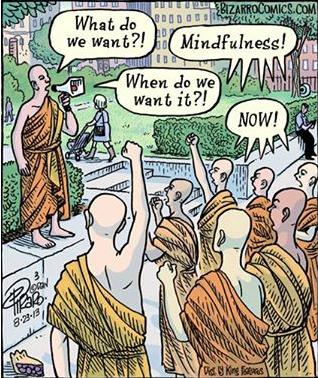
Mindfulness for the Full Mind

In recent weeks, I’ve been battling against my own reaction to noise. I eventually decided to stop blaming the external and work on my inner peace instead.

Last week, I was so exhausted (from lack of sleep but mainly from my own internal chitchat) that I gave up. And that was when the magic happened. I let go. I surrendered the control that I had been fearfully clasping on to so damn tightly. I recognised that I can’t control my surroundings. But I can be okay with them.

I was too tired to use all the positive tools and techniques that I’d taught myself over the years. So I stopped trying so hard. I simply accepted what was – the noise and how I was feeling.

I also figured out that I often felt anxious before the noise started. I was nervously anticipating when it would begin. Then, I would project into the following day and I’d imagine how tired I’d be. I was so very far removed from the present moment.

healthshire.com

healthshire.com

One word kept entering my mind: Mindfulness. Then, I remembered that I’d seen a workshop advertised a while back. I rooted out the email and, as synchronicity would have it, it was on in a few days’ time. I immediately signed up for it.

The workshop consisted of four hours of meditation, silence and mindful walking. Halfway through the class, I suddenly felt impatient. It was all so slow. Nothing was happening. It was then that I had a deep knowing that this was exactly what I needed – I had to physically slow down and bring my awareness to the present moment (my bodily sensations, my breathing and the sounds around me) in order to slow down the sprinting chatter of my mind.

No wonder I felt restless during this workshop as I had been living such a fast-paced life. Rushing to work. Coaching sessions. Classes. Reading. Cramming weekends with class preparation and assignments, then trying to squeeze in family time, dates and catch-ups with friends.

And even when I did sit down to watch television, whenever the ads came on, I’d check my emails, pop onto Facebook or send a text. I even checked my phone while sitting on the loo (hands up if you’ve done this!)

When I received an energy treatment the other day, I realised just how busy my mind was. I lay there composing emails and imagining conversations I would have. If I could just be present, I wouldn’t have to drain myself with all the mental rehearsing and reliving.

weheartit.com

weheartit.com

Last night, I woke at 2.30am and could not go back to sleep. So I got up, trudged into the sitting room and switched on the light. The first thing my bleary eyes landed on was a book that had been recommended to me almost a year ago – Mindfulness for Life by Craig Hassed and Stephen McKenzie.

It was just the right time to start reading this book. Hassed and McKenzie describe mindfulness as “the practice of paying attention.” They say that many people get interested in mindfulness because they want to learn to relax or cope better with stress and anxiety. However, they suggest that this can pose a problem. If we become too preoccupied with the goal of relaxing and destressing, we may become frustrated if the practice doesn’t turn out the way we expect or if we don’t achieve the results as quickly as we want.

Another interesting point they write about is how we try to cling to the bits of life that we like and banish those we don’t. Of course, this is understandable. We are trying to protect ourselves from suffering but this is what exactly what causes suffering.

Hassed and McKenzie write: “To be peaceful and happy we have to accept things that we don’t like when they come, and we have to let go of things that we do like when they go.” 

The only guarantee in life is that nothing is permanent. Not the good stuff, nor the bad. As the old adage accurately predicts: “This too shall pass.”

At five am, I put the book away and became aware of my bed and the feeling of it beneath me. I snuggled into the duvet and breathed deeply. I was aware of my breath and the sound of the rain outside. I was aware of my thoughts and how frequently they whisked me away from the present moment.

It was easy to want to detach from the negative thoughts but what I found challenging was to bring myself into the present when I was lounging in happy memories.

Recently, I had a pleasant experience. Last night, I found myself remembering all the tiny details of that moment. How I felt, what was said, what it all meant. I smiled as I relished reliving the event. However, I was no longer aware of my body, my breathing, the bed or the sounds outside. But why did I need to be mindful when I was clearly enjoying dwelling on certain parts of the past?

I asked myself: Was I truly present when that event was actually occurring? Incredibly, I hadn’t been. A large part of me had been caught up in thoughts, fears and expectations. And now, I was making up for it by reliving every last detail.

From this, I have learned that I need to practice mindfulness now so that I can be fully present in every moment. Then, I will be able to really bask in the pleasure and beauty of life. Practicing mindfulness will also help me to act effectively, with a clear mind, during the challenging times.

Hassed and McKenzie suggest starting with a mindfulness practice of five or ten minutes twice daily – before breakfast and dinner. It is best to sit upright and bring your awareness to the present moment by focussing on your breath, on an image or on the sounds around you.

The idea is that mindfulness can become part of your life, not just in a formal capacity. When you get into your car after work, take a few mindful breaths before you start driving. Wash the dishes mindfully. Brush your teeth mindfully. Eat, walk, and listen to music mindfully. Give your conversation partner the gift of a mindful ear. Conduct your relationships mindfully.

Mindfulness isn’t easy but it is oh so simple. Be present. Because all that exists is now.

be all there

Make Friends With Yourself

I’ve been pretty tired lately as I’ve been really busy and noisy neighbours have been robbing me of my precious sleep. I noticed that I’ve started feeling anxious, rushed, under pressure and annoyed.

Little things that wouldn’t usually bother me were playing on my mind. My thoughts were ceaseless and I found it difficult to wind down.

I longed for a holiday far away from it all, where I could enjoy a complete lack of work, deadlines, meetings and boisterous children next door. I would sleep and walk in nature and breathe…

However, right now, I can’t just take off. Well, I could if I really wanted to as I always have a choice. So right now, I’m saying yes to the assignments and visits, dates and appointments.

But I still need to take a moment in between. I need to create space for myself amongst all the busyness so that I can hear what’s going on for me.

But wasn’t that the last thing I wanted to do? I was fed up of hearing myself think. I slouched off into the dark bedroom and flung myself on the bed. I was full to the brim with my own thoughts.

Last night, I gave my Positive Living group the homework of recording their self-talk for one day. The purpose of this is to monitor how many negatives and positives you’re telling yourself and to see what negative issues are most common.

I decided to take on this task today and what a day it was to complete such an exercise. My self-talk was predominantly negative, full of doubt and criticism, perfectionism and irritation. And when I realised how negative I’d been, I felt even more negative. I really was sick of the sound of my inner critic.

So instead of trying to analyse or reason with myself, I wondered: What would a friend say if they overheard my self-talk?

Instantly, my inner voice became encouraging and supportive, gentle and complimentary. My inner-friend was understanding and compassionate and even offered some useful advice.

She told me to always listen to what I needed, to prioritise and to take enough time to rest and have fun. She insisted that my health and happiness were of utmost importance and whatever I needed to do to conserve both of those things was absolutely worth doing.

And you know what, she was right. I must listen to her more often.

What’s your inner friend telling you?

artsymphony.blogspot.gr

artsymphony.blogspot.gr

Being Negative For A Change

All day, I’ve had an anxious feeling in my chest. I haven’t been able to take deep, satisfying breaths. I had a busy day so I just pushed on through, hoping it would pass.

Tonight, I was about to watch television and simply ignore how I was feeling. I realised that I didn’t want to do that. I’m an advocate of sitting with your emotions and listening to what they have to tell you. So I sat. I slumped into the armchair, feeling down, frustrated, angry and fearful all at once.

Then, like the good writer and avid list-maker that I am, I reached for a notepad and pen. I decided, rather than run from the things that were annoying me, I’d write them all down. I don’t usually give so much energy to the negatives but, this time, I felt it would be therapeutic to have a look at what had been festering.

As synchronicity would have it, I came across this quote by Jill Bolte Taylor today: “Just like children, emotions heal when they are heard and validated.”

And so I moaned and doubted, raged and self-victimised all over two sides of an A4 sheet. I tore out the page and turned to a new one. Here, I wrote how all of my grievances were making me feel. Let’s just say that I don’t know if many other negative emotions even exist because I was feeling all of them.

Although I don’t believe in focussing on the negatives in life (and who’s to say what’s “negative” anyway?), it became clear to me that this was a really beneficial exercise.

I had been feeling this way for no apparent reason. However, when I asked myself what had been upsetting me, I was able to fill two entire pages with reasons.

I also realised that some of the things that were irritating me were things that don’t usually annoy me when I’m feeling good and energised. All of the small stuff was mounting up and creating a massive lump in my chest. It was robbing me of my peace. Or rather, I was allowing it to. But how was I to know what I was allowing when I hadn’t even given any of it my attention?

As I worked my way down the list of feelings that had arisen from all of my perceived problems, I recognised that there was one thing that would set me free. Acceptance.

I could accept the situation. I could accept other people as they are. I could accept what they had done and hadn’t done. I could accept that the past is the past (even if it only happened yesterday, it’s still old news). I could accept how I’m feeling right now. And most importantly, I could accept myself exactly as I am.

Acceptance melts resistance. Acceptance and struggle cannot coexist. Neither can acceptance and anger. Or acceptance and judgement.

When you accept something, you let go of the desire for things to be different. And with that, you become truly present. With that, you can breathe again…

freedom

Taking the Mind out of Mindfulness

I gave my Positive Living group the homework of doing one thing per day in complete mindfulness. This means being present with every sensation and emotion that you experience as you participate in an activity.

It involves being aware of the taste, smell, colour and texture of each ingredient you eat. It includes really listening to the sounds and silences of the music that’s playing. It’s about the feel of the ground beneath your feet with every step you take. It is the subtle sense of your breath as it leaves your nostrils and touches your skin.

We had a week off class because of the mid-term break. So one week later, when I started preparing this week’s class, I remembered the homework. I hadn’t done it once. I was anything from an exemplary teacher. I resolved to start. I still had a week.

This evening, as I sat down to dinner, I remembered the task. I had totally forgotten about it again. This was the perfect opportunity to practice. I could eat mindfully right now. But it’ll take too long, my inner resistance whined.

The logical part of me suggested that it wouldn’t take much longer to eat mindfully than it would to just eat. The only difference would be that I’d have to set aside my mind chatter for a few moments. You know what happened? I lost my appetite.

To be perfectly honest, I still haven’t done my homework. Some stubborn part of me is refusing to let go of the busyness, to quiet the din, to slow down, to simply be.

I’m sure the reason for this will become apparent but I’ll probably have to do all of the things I just mentioned first.

Could you do one thing per day in complete mindfulness for a week? If so, please let me know how you get on. I’d love to learn from you.

runningahospital.blogspot.ie

runningahospital.blogspot.ie

Are You a Pessimist?

Over the years I’ve noticed that any time I get into really bad form, it’s because I’ve started believing the thoughts that are telling me that everything has gone to shit.

I’m lazy and useless. I’ve gained weight. I’m ugly. I’m alone. I’ll never amount to anything.

Recently, I observed that I was slipping into one of those moods. Rather than dwell on it, I switched on an interview with Dr. Joan Borysenko, psychologist and mind-body medicine expert.

I was half-listening as I got ready for bed when I heard Joan speaking about pessimistic thinking. Joan says that you can inherit a pessimistic world view. This type of thinking happens when you lose hope and can’t see a way out of things.

When something bad happens, Joan suggests looking at your explanatory style. How do you explain this negative occurrence to yourself? Martin Seligman put forward the Three Ps of Pessimism. They are as follows:

1. You take things Personally. You blame and even hate yourself. You can see from above how I was telling myself that I was lazy and useless.

2. Your thinking is Pervasive. Nothing in your life is good. Relationships, family, work, body-image: all crap.

3. Permanence. You’re in a mental rut and you can’t imagine that your life could be any different. You feel stuck. I was telling myself that I’d never amount to anything and that I’d always be alone.

This was a revelation to me. I was relieved to realise that I am not alone in this type of thinking. And once I become aware of it, and own it, it immediately loses its grip on me. I can choose the way I think.

Joan suggests disputing what you say to yourself. When you watch your mind and witness your thoughts, you can see that you’re telling yourself a story, one that isn’t true. This creates distance from the thoughts so you can observe and even learn from them.

Joan explains the science behind all of this, which I won’t go into in detail now. Basically, she states that you can change your brain circuitry. Brain plasticity allows for the rewiring of your nervous system. So you don’t have to be stuck with pessimism for the rest of your life.

Joan doesn’t suggest shifting from pessimism to optimism. Rather, she speaks about the benefits of stress-hardy or I-can-do-it thinking, which is more realistic.

Suzanne Kobasa introduced the Three Cs of Stress-Hardy Thinking. They are as follows:

1. The stress-hardy thinker will want to rise to the Challenge.

2. Commitment. The person will stick with the challenge and see it through.

3. Control. The stress-hardy thinker doesn’t try to control the uncontrollable. Instead, they focus on what they can control.

And if you can’t see yourself making the leap into stress-hardy thinking just yet, Joan suggests a few quick and simple tips to calm down your fear responses. Deep breathing, exercise and just a five-minute meditation can be enough to bring you back from your pessimistic thinking.

Do you recognise yourself in any of this? If you get caught in a spiral of pessimism every now and again, don’t beat yourself up. You’re human. But you do have choices. Change your thinking, change your life. Are you up for the challenge?

themebin.com

themebin.com

The Sound of Silence

On January 31st, I made a list of goals for February. One of those goals was to sit in silence for five minutes first thing every morning. Since before Christmas, I’ve been emphasising the importance of silence to my Positive Living group. However, even I hadn’t managed to set aside just five minutes each day.

For the last nine days before I get out of bed, I’ve been giving gratitude for about five things in my life. This instantly brings me joy. Then I wash my face and, if my body feels the need, I do a bit of yoga. Next, I move into the living room and sit in silence for about five minutes. I don’t switch on my phone until I have completed this ritual. This really centres me for the day ahead. And if I feel unsettled in the evening, I give myself time to sit in silence and observe what is going on for me. This allows me to get in touch with my body and the subtle messages it’s giving me. Often, I feel compelled to write afterwards or I get an idea for a class or a solution to a problem I’ve been mulling over. Other times, I simply enjoy the space and quiet I’m giving myself. I feel an expansion and a blurring of all those things I used to think were so important. There is freedom and peace and connection in these moments.

Last night, I did a meditation with someone who said: “Your mind is just another organ. You can’t stop it from thinking. Just like you can’t stop yourself from breathing. The trick is to focus on the breath. Allow the thoughts. Do nothing. Try nothing. Just observe.” We sat in silence, focussing on the breath for at least 15 minutes. The time flew. And I felt totally relaxed. When I came home, I didn’t open the laptop straight away as I usually would because I just didn’t need the noise.

Meditation has been scientifically proven to improve health and mental wellbeing. It lowers blood pressure and boosts the mood and immune system. When we are stressed, our breathing speeds up and we find it difficult to take a deep, satisfying breath. Meditation helps us to unwind. When we relax, our breathing slows down. This benefits the heart and blood flow to the organs, which in turn allows for healing to take place.

When we meditate mindfully, the idea is not to change anything. We don’t attempt to slow the breath or change or banish the thoughts. It’s all about awareness. Observe the breath. Bring awareness to the sensations in the body. Allow the thoughts to occur. And when we don’t attach to the thoughts or bodily sensations, they will move on like clouds in the sky.

Many people who are trying to change their lives for the better come to the realisation that happiness is a choice and that their negative thinking is impacting their lives. Therefore, they try to change their thoughts. While I believe that it is beneficial to introduce gratitude for all the good things in our lives and focus on that which brings us joy rather than pain, I also feel that it is counterproductive when we begin stressing over the negative thoughts we are having. Awareness is key. Don’t judge your thoughts or deny the parts of you that you perceive to be “bad”. Simply observe, let go and focus on the breath…

"You should sit in meditation for 20 minutes a day, unless you're too busy; then you should sit for an hour." Old Zen saying

“You should sit in meditation for 20 minutes a day, unless you’re too busy; then you should sit for an hour.” Old Zen saying

Image: bendalayoga.com

For more on meditation, check out: https://betterthansurviving.me/2012/03/04/time-takes-from-the-essence/

Feel good (in an instant)

Below are some simple, speedy ways to uplift yourself… instantly!

  • Smile (Simply put, this will tell your brain that you are happy.)
  • SIT UP STRAIGHT (When you’re depressed, you slouch. Change your posture, change your mood.)
  • Get out in nature (Energetically speaking, nature has a high vibrational frequency, which will override the low frequency of a bad mood.)
  • Sing
  • Put on your favourite tune (And dance!)
  • Read an inspiring quotation or watch an encouraging video (Buy a calendar that has a daily quote or subscribe to a blog / YouTube channel / Facebook page that posts regular uplifting updates.)
  • Write down five things you are grateful for
  • Say (aloud) five things you love about yourself
  • Light a candle
  • Take a few deep breaths
  • Put on a slick of lipstick and your favourite perfume / your best shirt and sexiest aftershave
  • Buy yourself a bunch of flowers (You’ll smile every time you walk past them because 1. they’re beautiful  and 2. they’re a reminder that you’ve done something wonderful for yourself.)

Do one of these things right now and observe the change in your mood. Then, work your way through the list. Soon, you’ll be doing these things automatically because feeling good is so natural. Enjoy!

“Sometimes your joy is the source of your smile but sometimes your smile can be the source of your joy.” Thich Nhat Hanh